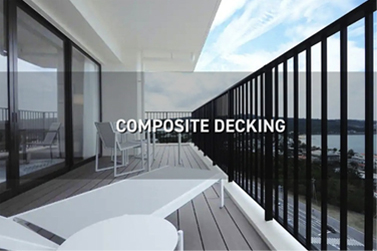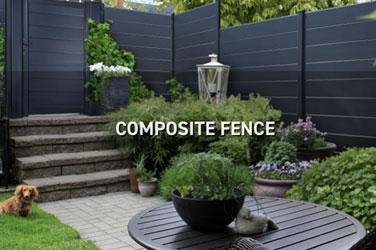


Not all outdoor projects are about large-scale construction or premium architectural statements. In many real situations, the need is much simpler: refresh a balcony, improve a small patio, upgrade a garden corner, or create a usable surface on a terrace without heavy renovation work.
This is exactly where conventional WPC DIY tiles become relevant.
Unlike complex decking systems that require subframes or professional installation, this type of modular flooring is designed for direct use. It focuses on practicality—quick placement, easy replacement, and a straightforward structure that works in everyday environments.
Based on Wallong’s product system, conventional WPC DIY tiles are positioned as an economical and accessible solution for outdoor flooring, combining recycled materials with a simple interlocking base structure that supports DIY installation.
Balcony Renewal: Turning Underused Space Into Usable Area
Balconies are one of the most common spaces where people first experience WPC tiles. The reason is simple: they are usually small, exposed, and often left unfinished.
Instead of leaving concrete surfaces unchanged, many users choose modular flooring to quickly upgrade the space.
Typical balcony use cases include:
compact seating corners
small plant zones
reading or relaxation areas
coffee or morning routine spaces
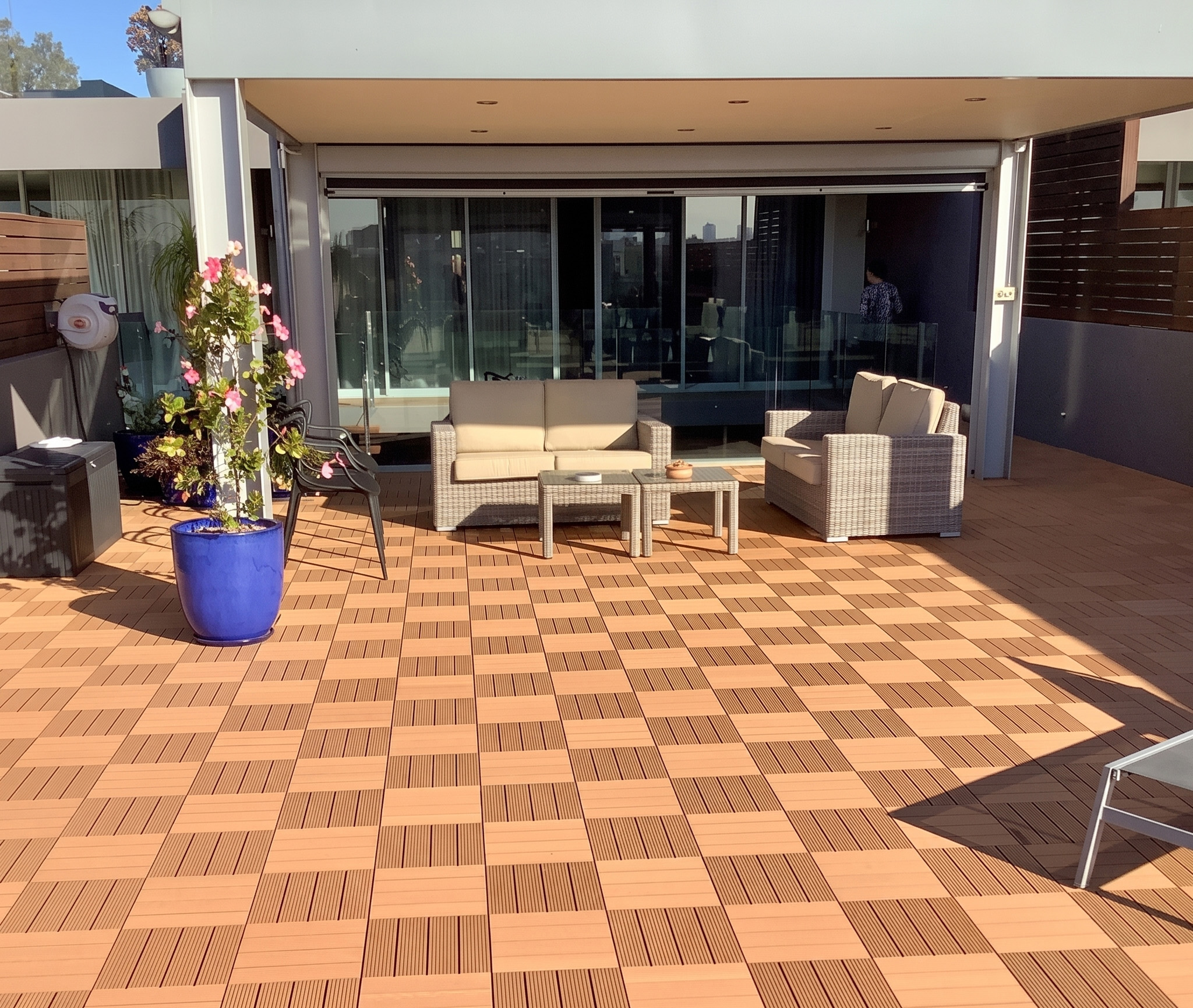
The advantage of conventional WPC DIY tiles is that they can be installed directly on flat surfaces without adhesives or special tools.
This makes them particularly suitable for rental apartments or spaces where permanent renovation is not an option.
Small Patio Spaces: Low Effort, Visible Improvement
For homeowners with small outdoor patios, full decking construction is often unnecessary. The cost and installation effort can outweigh the actual usage needs.
This is where modular flooring becomes practical.
With WPC tiles, users can:
cover uneven or plain surfaces quickly
create a cleaner visual finish
define functional outdoor zones
replace individual tiles when needed
Compared with traditional decking systems, the appeal lies in simplicity rather than construction depth.
Garden Corners: Creating Soft Outdoor Zones Without Construction Work
Garden areas do not always require full flooring coverage. In many cases, only specific zones need structure—such as seating corners, barbecue spots, or pathway edges.
Conventional WPC DIY tiles allow these zones to be created without permanent ground changes.
Common applications include:
small lounge corners under trees
decorative seating platforms
plant display bases
outdoor storage zones
Because the tiles are modular, users can expand or adjust layouts over time without rebuilding the entire surface.
Temporary Outdoor Setups: Flexible Use Without Long-Term Commitment
Another practical use case is temporary outdoor arrangements.
This includes seasonal setups or short-term functional spaces such as:
family gatherings
outdoor dining setups
temporary event corners
rental property staging
In these situations, the value of WPC DIY tiles is not permanence, but reversibility.
They can be installed when needed and removed without damaging the base surface.
Understanding Material Logic: Why This Category Works
To understand why conventional WPC tiles are widely used in these scenarios, it helps to look at the material structure.
WPC (wood plastic composite) is made by combining wood fibers and recycled plastics, creating a material that balances wood-like appearance with plastic durability.
In tile form, this material is used with an interlocking base system, which allows each piece to connect without screws or adhesives.
Key practical characteristics include:
moisture resistance for outdoor exposure
reduced risk of cracking compared to natural wood
simple installation over flat surfaces
low maintenance requirements
This combination makes it suitable for non-structural outdoor flooring applications.
Practical Comparison: Where DIY Tiles Make Sense
Not every outdoor space benefits equally from modular tiles. The table below shows where they fit best in real use cases:
Use Scenario | Suitability of Conventional WPC DIY Tiles | Reason |
Balcony upgrades | High | Small area, no structural work needed |
Rental outdoor spaces | High | Removable and non-permanent |
Large commercial decks | Medium | Better for modular sections, not full-scale builds |
Heavy-load industrial zones | Low | Not designed for structural load |
Temporary setups | High | Easy install and removal |
This shows that the strength of conventional WPC DIY tiles lies in flexibility rather than heavy engineering applications.
Design Simplicity: Why It Works in Everyday Aesthetics
Unlike more complex decking systems that focus on layered surface technology or premium finishing, conventional WPC tiles prioritize straightforward visual consistency.
They are commonly used in:
neutral outdoor styling
simple residential upgrades
functional rather than decorative spaces
The goal is not to dominate design, but to support it quietly in the background.
This makes them suitable for users who want improvement without redesigning the entire outdoor environment.
Maintenance Perspective: A Long-Term Practical Advantage
One of the overlooked benefits of modular WPC flooring is maintenance simplicity.
Instead of repairing an entire surface, users can:
replace individual damaged tiles
clean surfaces using basic tools
reconfigure layouts without demolition
extend lifespan through partial replacement
This reduces long-term effort, especially in spaces that experience occasional but not constant use.
Wallong’s Position in This Category
Within this product segment, Wallong focuses on delivering conventional WPC DIY tile systems that prioritize usability and cost efficiency.
The design philosophy is straightforward:
keep installation simple
maintain stable outdoor performance
support everyday residential and light commercial use
reduce dependence on professional construction work
This makes the product category accessible to both DIY users and small-scale project developers.
Conclusion: A Practical Solution for Real Outdoor Needs
Conventional WPC DIY tiles are not designed to replace full-scale decking systems. Instead, they solve a different problem—how to improve small and medium outdoor spaces without construction complexity.
From balconies and patios to garden corners and temporary setups, they offer a flexible way to upgrade surfaces quickly and reversibly.
In everyday use scenarios, that practicality often matters more than structural sophistication.
And that is why this category continues to find consistent adoption in real-world outdoor living spaces.