

If you look closely at recent outdoor renovations—rooftop lounges, boutique hotel terraces, upgraded balconies in new residential projects—you’ll notice something subtle but consistent: fewer traditional decking structures, and more modular flooring systems appearing almost everywhere.
Not loudly promoted, not aggressively marketed in most cases, but steadily adopted in real projects.
Among them, superior co-extrusion WPC DIY tiles are becoming a quiet favorite.
The reason is not complicated. Outdoor spaces today are expected to be faster to build, easier to maintain, and flexible enough to change in the future. Traditional decking systems often struggle with that combination. Modular WPC interlocking decking tiles, on the other hand, fit neatly into this new expectation without requiring major structural changes.
Brands like Wallong have been refining this direction, focusing on practical outdoor flooring systems that feel simple in use but stable in long-term performance.
Rooftops Are No Longer “Hard to Build Spaces”
Rooftops used to be difficult zones in construction planning—structurally sensitive, installation-heavy, and often avoided unless necessary.
That mindset is changing.
Today, rooftop spaces are expected to function as usable environments: lounge areas, cafés, small gardens, or even semi-public social spaces.
This shift explains why interlocking composite decking tiles are appearing more frequently in rooftop projects.
Instead of building a full fixed deck system, installers can now place WPC DIY interlocking tiles directly on stable surfaces. The process is fast, and more importantly, reversible.
If a layout changes later, the flooring can be adjusted without demolition.
In real projects, this flexibility often matters more than people initially expect.
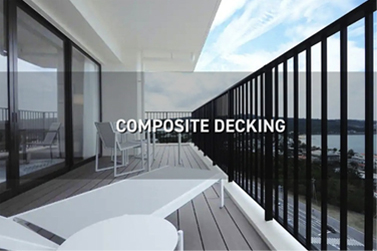
Balconies: Small Spaces, High Expectations
Balcony design has quietly become a major part of residential value. Even small apartments now treat balconies as extensions of interior living space rather than storage corners.
This is where modular flooring shows its real advantage.
With quick deck composite deck tile systems, a plain concrete balcony can be upgraded without dust, noise, or construction downtime.
Typical use cases include:
compact seating corners
small outdoor coffee areas
mini garden setups
reading or relaxation spaces
What makes the system appealing is not just appearance, but how quickly the transformation happens. In many cases, the installation can be completed in a short time without specialized construction tools.
The Hotel Industry Has Already Quietly Adopted It
In hospitality design, flooring is rarely discussed publicly, but it plays a direct role in guest perception.
Hotels and resorts often rely on consistent outdoor surfaces that look clean, stay stable, and are easy to maintain even under constant use.
This is where grey composite decking tiles have become increasingly common.
Neutral tones work well in modern hospitality aesthetics—they don’t compete with architecture or landscape design, but instead support them.
More importantly, interlocking composite deck boards offer something operational teams value highly: the ability to replace individual sections without shutting down entire areas.
For poolside decks, terrace lounges, and outdoor seating zones, that flexibility reduces maintenance pressure significantly.
.jpg "Modular_Outdoor_Flooring_That’s_Quietly_Reshaping_How_Spaces_Get_Built_(2).jpg")
Poolside Areas Are a Real Stress Test
If there is one environment that quickly reveals material weaknesses, it is poolside flooring.
Constant moisture, barefoot use, sunlight exposure, and cleaning chemicals all create long-term stress.
This is where WPC interlocking decking tiles tend to perform steadily.
They don’t rely on a single fixed structure. Instead, each tile works as an independent unit connected through an interlocking base.
That means:
water does not accumulate in a sealed system
damaged sections can be replaced individually
maintenance is localized, not structural
For operators, this reduces long-term operational risk. For designers, it allows more freedom in layout planning.
Commercial Spaces Care More About Time Than Design Theory
In retail environments, exhibition areas, or public commercial zones, installation speed often matters more than architectural storytelling.
A shop opening delay or event preparation delay can directly translate into cost loss.
That is why interlocking composite decking tiles are increasingly used in commercial outdoor flooring projects.
They offer:
fast installation cycles
minimal site disruption
scalable coverage for large areas
easy replacement after heavy use
In many cases, contractors choose modular systems not because they are trendy, but because they reduce project uncertainty.
The Quiet Role of Surface Technology
One detail that often gets overlooked is surface protection.
With superior co-extrusion WPC DIY tiles, the surface layer is not just decorative—it acts as a protective shield.
Compared to conventional composite flooring, this structure improves:
resistance to UV fading
stain resistance from food or outdoor exposure
surface durability under frequent foot traffic
long-term color stability
This is especially important for outdoor spaces that are expected to “look new” for years, not just months.
Wallong’s approach in this category focuses on stability rather than visual exaggeration. The idea is simple: outdoor flooring should not demand constant attention.
Why Designers Prefer Modular Systems (Even If They Don’t Say It Directly)
Designers rarely say it explicitly, but modular flooring changes how outdoor spaces are planned.
With WPC DIY interlocking tiles, layouts are no longer permanently fixed at the construction stage. They can evolve.
That opens up design possibilities such as:
zoning outdoor areas without structural barriers
changing spatial layout over time
testing different visual directions before finalizing design
This flexibility is especially useful in hospitality and residential renovation projects where user behavior is not fully predictable at the beginning.
The “Invisible Advantage” of Easy Replacement
One of the least discussed but most valuable features of modular flooring is replacement logic.
In traditional decking systems, damage often requires partial reconstruction. In modular systems, it usually requires removing only the affected tile.
This is where interlocking composite decking tiles quietly outperform fixed systems.
Over time, this reduces:
maintenance labor
repair cost
downtime of usable space
For property managers, this operational simplicity is often more valuable than initial appearance differences.
Where Wallong Fits Into This Shift
Behind many of these applications is a simple requirement: consistency.
Wallong focuses on producing WPC interlocking flooring systems that maintain stable quality across different project types—residential, hospitality, and commercial.
The goal is not to overcomplicate the product, but to keep it predictable in real use conditions.
That includes:
stable interlocking structure
outdoor weather resistance
consistent surface finish
practical installation behavior
In many projects, especially large-scale ones, predictability matters more than anything else.
.jpg "Modular_Outdoor_Flooring_That’s_Quietly_Reshaping_How_Spaces_Get_Built_(1).jpg")
A Quiet Shift, Not a Loud Trend
What is happening in outdoor flooring is not a sudden revolution. It is a gradual shift driven by real construction needs.
More projects are choosing modular systems because they reduce friction—during installation, during maintenance, and during future upgrades.
Whether it is WPC interlocking decking tiles in a balcony renovation, or quick deck composite deck tile systems in commercial spaces, the logic is the same:
simpler structure, easier control, more flexibility.
And once a project team has worked with that kind of system, it is difficult to go back to fully fixed traditional decking.
Not because traditional systems are obsolete, but because expectations have changed.