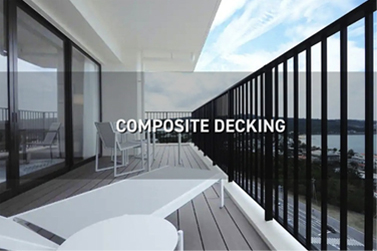


In humid and rainy regions, balcony water accumulation, slippery terraces, courtyard moss... these troubles caused by moisture not only affect daily use experience but may also hide safety hazards. The WPC outdoor decking, with its dual features of slip resistance and wear resistance, as well as adaptability to damp environments, is gradually becoming the preferred material for creating safe and comfortable outdoor spaces.
Slip-Resistant Design: Walk Safely Even on Rainy Days
Slippery ground is a common safety hazard in outdoor spaces. Traditional tiles lose friction sharply when wet, and wooden floors may swell and become uneven due to water absorption. The outdoor WPC decking has optimized both material and surface craftsmanship to meet slip resistance requirements.
Biomimetic texture design
The surface of outdoor WPC decking simulates the natural uneven texture of wood through embossing, while adding fine anti-slip particles. This design retains the natural feel while significantly increasing friction in wet conditions.
Drainage and water-guiding structure
The WPC outdoor decking products use hollow or channel groove designs that allow rainwater to quickly drain through the deck gaps, avoiding water accumulation. This feature is especially suitable for open courtyards or poolside areas, keeping the ground dry even during sudden heavy rain.
Wear Resistance: A Strong Performer in High-Frequency Use
Outdoor spaces are often used more frequently than indoors. Moving furniture, pets running, children playing... these daily activities place higher demands on the decking's wear resistance. The outdoor WPC decking balances durability and comfort through high-density materials and special coating technology.
Impact-resistant materials
The raw materials of WPC outdoor decking blend high polymer polymers and natural wood powder, formed under high temperature and high pressure. Its hardness and toughness far exceed ordinary wood. Even when heavy objects fall or sharp items scratch, the surface only shows minor marks without cracking or splintering.
UV-resistant coating
To counter strong summer sunlight, the surface of WPC decking outdoor is coated with a UV-resistant layer that prevents fading caused by prolonged exposure and enhances surface wear resistance.
Stability in Humid Environments: Dual Assurance from Material to Structure
Humid climates pose a great challenge to decking stability, and WPC decking outdoorachieves "waterproof, moisture-proof, and deformation-resistant" performance through the following designs:
Closed-cell foam structure
The decking interior uses closed-cell foaming technology to form isolated bubble structures, which reduce weight and effectively block water penetration. Even after long-term immersion in water, it will not swell or mold.
Locking installation
Outdoor WPC decking generally adopts a locking joint installation, tightly connecting boards into an integrated structure. This installation method avoids gaps or warping caused by thermal expansion and contraction, making it especially suitable for Tianjin's large day-night temperature differences.
Environmental Protection and Practicality Combined: Creating Sustainable Outdoor Spaces
While pursuing functionality, outdoor WPC decking also embraces environmental concepts. Over 30% of its raw materials come from recycled plastics, the production process is low-carbon and eco-friendly, and it is recyclable. The wood grain imitation design visually matches natural wood perfectly and can even simulate textures of teak, oak, and other wood species to meet users' desire for natural style.
With slip resistance and wear resistance as core strengths, combined with structure design adapted to humid environments, WPC decking outdoor provides a safer, more durable outdoor space solution. Whether for residential balconies, commercial terraces, or public leisure areas, it offers stable performance and natural texture, becoming a reliable barrier against humid climates. Choosing outdoor WPC decking makes every outdoor moment safer and more relaxed.